Varicose Vein Treatment in San Diego: Minimally Invasive Options That Actually Work

Varicose veins are more than a cosmetic concern for many adults. Enlarged, twisted veins can be associated with aching, heaviness, swelling, itching, restless legs, or discomfort after prolonged standing. Even when symptoms are mild, visible varicose veins may reflect an underlying problem with how blood returns from the legs to the heart.
The good news is that modern varicose vein treatment is often minimally invasive, performed in an outpatient setting, and tailored to the veins involved. At La Jolla Vein & Laser in San Diego, evaluation and treatment planning are guided by medical expertise, diagnostic ultrasound, and the individual patient’s symptoms and goals.
What Causes Varicose Veins?
Healthy leg veins contain valves that help direct blood upward toward the heart. When those valves become weakened or do not close properly, blood can flow backward and collect in the veins. This is commonly referred to as venous reflux or venous insufficiency.
Over time, increased pressure may cause superficial veins to enlarge, twist, and become more visible beneath the skin. Factors that may contribute include:
- Family history of varicose veins
- Age-related changes in vein valves
- Pregnancy and hormonal changes
- Prolonged standing or sitting
- Previous blood clots or vein problems
- Higher body weight
- Limited mobility
Varicose veins can appear on the thighs, calves, or around the knees and ankles. Some people notice only their appearance, while others experience aching, leg fatigue, swelling, itching, or skin changes near the ankle.
Because visible veins do not always reveal the full pattern of reflux, a medical evaluation is important before choosing treatment.
When Should You See a Vein Specialist in San Diego?
Consider scheduling an evaluation with a vein specialist in San Diego if you notice:
- Bulging, rope-like, or twisted veins
- Aching, throbbing, or heaviness in the legs
- Swelling that worsens later in the day
- Itching, burning, or cramping near visible veins
- Symptoms that improve when your legs are elevated
- Skin discoloration or texture changes around the ankles
- A sore or wound near a varicose vein that is slow to heal
A sudden change (such as significant new swelling, severe pain, redness, warmth, chest pain, or shortness of breath) requires prompt medical attention rather than a routine cosmetic consultation.
Varicose veins and spider veins are not the same. Spider veins are usually smaller, web-like vessels near the skin’s surface. A spider vein treatment in San Diego may involve sclerotherapy or a laser procedure, depending on the vessels involved. Bulging varicose veins may require evaluation and treatment of larger underlying veins.
Why Ultrasound Matters Before Varicose Vein Treatment
A medical-grade vein evaluation typically includes a duplex ultrasound. This noninvasive study allows the care team to examine blood flow, identify reflux, and map the veins involved.
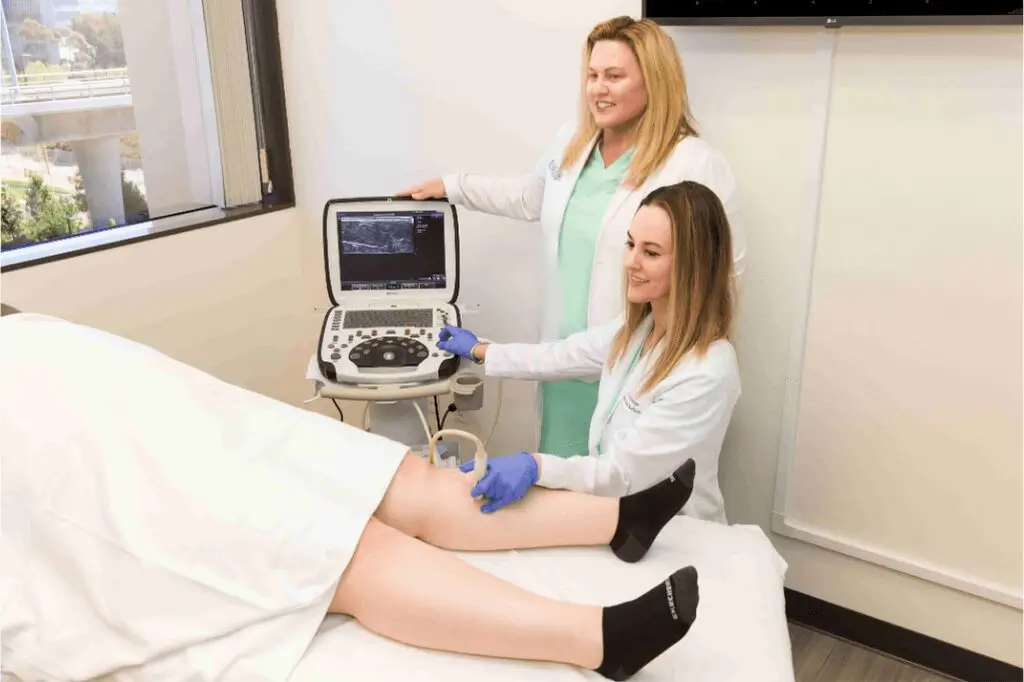
Ultrasound can help answer important questions:
- Is there reflux in a larger superficial vein?
- Which veins are contributing to the visible varicosities?
- Are there smaller branch veins that also need attention?
- Is there evidence of another circulation problem?
- Which treatment approach is most appropriate?
This distinction matters because treating only the visible portion of a varicose vein may not address the source of the problem. Spa-based or appearance-only “vein” offerings may not include a comprehensive diagnostic assessment. A physician-led vein practice can evaluate both the appearance of the veins and the underlying circulation.
At La Jolla Vein & Laser, diagnostic ultrasound imaging is part of the clinic’s broader medical vein services. The practice’s services overview includes care for varicose veins, chronic venous insufficiency, spider and reticular veins, and diagnostic ultrasound imaging.
Minimally Invasive Varicose Vein Treatment Options
The most appropriate treatment depends on the size and location of the veins, the presence of reflux, your symptoms, your medical history, and your preferences. Common minimally invasive options include the following.
Endovenous Laser Ablation
Endovenous laser ablation, sometimes called EVLA or EVLT, uses a thin catheter and laser energy to treat a refluxing vein. The catheter is placed through a small skin puncture, and the laser heats the inside of the vein so it closes.
Once the treated vein is sealed, blood can redirect through healthier veins. Endovenous laser treatment is commonly considered for larger superficial veins that contribute to varicose veins. It is performed with ultrasound guidance and is generally an outpatient procedure.
Radiofrequency Ablation
Radiofrequency ablation uses a catheter to deliver controlled radiofrequency energy to the vein wall. The energy causes the targeted vein to close, allowing circulation to reroute through functioning veins.
Like laser ablation, RFA is typically considered when ultrasound shows reflux in a larger superficial vein. The procedure usually involves a small puncture rather than a large incision, and the treatment plan may include additional care for visible branch veins.
VenaSeal-Type Closure
VenaSeal-type procedures use a medical adhesive to close a diseased vein rather than heat from laser or radiofrequency energy. This is considered a nonthermal closure technique.
A catheter delivers the adhesive inside the selected vein under ultrasound guidance. Whether this option is appropriate depends on the vein anatomy, the patient’s health history, and the treating physician’s assessment. Nonthermal closure is not automatically better than thermal ablation; each approach has potential benefits, limitations, and risks to discuss during consultation.
Sclerotherapy
Sclerotherapy involves injecting a medication into a targeted vein. The solution irritates the vein lining, causing the vessel to close and gradually become less noticeable.
It is often used for spider veins, reticular veins, and smaller varicose veins. Sclerotherapy may also be used as part of a broader treatment plan after a refluxing source vein has been addressed. Some treatments use liquid medication, while others may use foam under ultrasound guidance.
Microphlebectomy
Microphlebectomy, also called ambulatory phlebectomy, is designed for larger, bulging surface veins. Through tiny punctures or small incisions, the physician removes the targeted vein in sections.
The procedure is usually performed with local anesthesia. Stitches may not be necessary, although the technique and aftercare depend on the individual case. Microphlebectomy is often combined with treatment of an underlying refluxing vein, such as laser or radiofrequency ablation.
What Is Recovery Like?
Recovery varies according to the treatment performed and the number of veins treated. Many minimally invasive procedures are completed in an outpatient setting, but “minimally invasive” does not mean that every patient has the same recovery experience.
You may be advised to:
- Walk soon after treatment
- Avoid strenuous exercise for a short period
- Wear compression garments if recommended
- Expect temporary bruising, tenderness, or tightness
- Keep follow-up appointments
- Return for a follow-up ultrasound when clinically appropriate
Some patients return to normal daily activities quickly, while others may need additional time based on their treatment plan and occupation. Your physician should provide specific instructions regarding driving, exercise, work, bathing, and compression.
Why Choose a Physician-Led Vein Practice?
Choosing a clinic for varicose vein treatment involves more than comparing procedure names. Look for a practice that can evaluate the underlying vein condition, explain appropriate options, and provide medically supervised follow-up.

La Jolla Vein & Laser is part of a comprehensive vein and medical aesthetics practice serving patients in La Jolla and throughout San Diego. The medical vein division is led by board-certified vein specialists, while the broader practice also offers aesthetic services, including laser procedures and skin rejuvenation treatments.
That combination can be valuable for patients who want their health concerns and cosmetic goals considered in one coordinated setting. However, vein treatment should begin with a medical assessment, not simply a procedure selected from a menu.
The practice’s provider team includes vascular physicians and other clinicians focused on vein disease, diagnostic ultrasound, cosmetic vein care, and aesthetic medicine. Medical Director Nisha Bunke, M.D. has specialized training in venous and lymphatic medicine and has led the practice’s vein care efforts in the San Diego community.
Start With a Personalized Consultation
There is no single best varicose vein treatment for every patient. The right approach depends on what is happening beneath the skin, not only on how the veins look from the outside.
If you are experiencing bulging veins, leg discomfort, swelling, or concerns about progression, schedule a consultation with the physician-led team at La Jolla Vein & Laser. A diagnostic evaluation can help clarify whether treatment is appropriate and which minimally invasive options may fit your anatomy, health history, and goals.
Book a consultation or learn more through the new patient consultation page. La Jolla Vein & Laser is located at 9850 Genesee Avenue, Suite 410, La Jolla, California.